Harfterd: A Modern Serif Font That Elevates Handmade Goods
It was a quiet Tuesday morning—coffee steaming, label printer warming up—and I was finalizing the first batch of soy wax candle labels for my spring collection. The scent names were simple: “Linen & Rain,” “Honeyed Sage,” “Dusty Rose.” But something felt off. The clean sans serif I’d used last season looked crisp, yes—but it didn’t carry the warmth, the quiet luxury, the handmade intention behind each pour. That’s when I opened Harfterd.
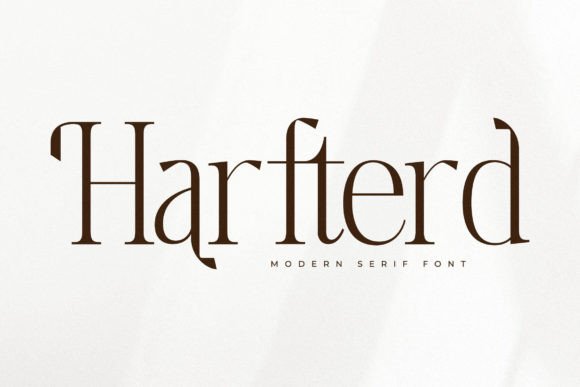
From the moment I typed “Linen & Rain” in Harfterd, everything shifted. Its modern serif structure—clean lines with subtle contrast, gentle bracketing on the serifs, and just enough personality without tipping into fussiness—felt like finding the right stitch for a hand-embroidered tag. Harfterd isn’t ornate or old-world; it’s refined, contemporary, and quietly confident. It has presence without shouting. That balance is rare—and invaluable when your product lives on a shelf beside others, or as a thumbnail in someone’s Etsy feed.
I tested it across real making scenarios: printing matte-finish kraft tags for ceramic mugs, laying out wedding invitation suites (yes, even the delicate RSVP cards), designing printable wall art for nurseries and home offices, and prepping SVG files for Cricut users who cut vinyl for tote bags and boutique signs. In every case, Harfterd held its own—not as background filler, but as a design asset that elevated the whole piece.
What makes Harfterd especially practical for makers? First, its versatility in scale. At 12 pt, it’s legible and graceful on product labels—even narrow ones like tea tins or mini soap wraps. At 48 pt+, it becomes a statement: perfect for greeting card headers, farmhouse-style wooden signs, or digital download covers for planner pages and habit trackers. Its letterforms are open and well-spaced, so it cuts cleanly on Silhouette and Cricut machines—even at smaller sizes (down to 6–8 pt for fine-detail sticker sheets, provided you’re using high-resolution print settings).
For packaging, Harfterd brings cohesion. I used it consistently across candle labels, box stamps, and thank-you cards—and customers began commenting on how “thoughtful” the unboxing felt. Not because of fancy ribbons (though those help!), but because the typography whispered care. Serif fonts like Harfterd inherently signal craftsmanship, timelessness, and attention to detail—qualities handmade buyers actively seek.
It shines brightest in display use: shop banners, social media quote graphics, seasonal product launches (think “Cozy Autumn Collection” on a linen tea towel), and wedding welcome boards where elegance matters but formality doesn’t. While Harfterd isn’t designed for long paragraphs—skip it for multi-page instruction booklets or dense product descriptions—it excels at short, meaningful text: names, titles, quotes, scent profiles, monograms, and brand slogans.
Pairing Harfterd thoughtfully unlocks even more potential. I often pair it with a neutral, airy sans serif (like Montserrat Light or Inter) for body text on greeting cards or digital templates—creating contrast that feels intentional, not accidental. For wedding stationery, I’ll layer it with a delicate script font for names or dates, letting Harfterd anchor the layout while the script adds softness. And for boutique tags or gift wrap stamps? Sometimes Harfterd stands beautifully alone—no pairing needed. Its rhythm and spacing do the work.
Before diving in, I always check what’s included. Harfterd comes with multiple weights (Light, Regular, Medium, Bold), true italics, standard ligatures, and stylistic alternates—details that matter when you’re refining a logo lockup or customizing a quote for printable wall art. It supports extended Latin characters, so it works reliably for bilingual greeting cards or international Etsy listings. And crucially, it’s licensed for commercial use: meaning you can embed it in digital templates, use it on physical products you sell (mugs, shirts, stickers), and include it in SVG cut files—no extra permissions needed.
I’ve used Harfterd on cotton tote bags printed with water-based ink—its clean serifs stayed sharp, even after washing. On ceramic mugs fired at high heat—the bold weight held definition against glossy glaze. On matte-finish greeting cards—its subtle contrast added tactile sophistication without needing foil stamping. And for digital downloads? It renders beautifully on screen and prints crisply from home printers or professional services alike.
Seasonal projects benefit especially. Last holiday season, I designed a set of printable gift tags using Harfterd for the recipient names and a minimalist sans for “To/From”—the contrast felt festive yet grounded. For spring, I paired it with hand-drawn botanical elements in Canva mockups, and the font’s clarity kept the focus on the illustration, not the type. Even in black-and-white laser prints for planner inserts, Harfterd’s balanced stroke weight prevented visual fatigue—important when someone’s using those pages daily.
If you're choosing a serif font for your shop, ask yourself: Does it reflect the feeling you want people to have when they hold your product? Does it support your materials—not fight them? Does it scale gracefully from a tiny sticker to a large-format poster? Harfterd answers yes to all three. It’s not flashy. It doesn’t demand attention—it earns it, quietly, consistently, every time it appears on a label, a card, a mug, or a digital file.
Typography is one of the most accessible ways to strengthen your brand identity—no new equipment, no steep learning curve, just thoughtful selection and consistent application. Harfterd gives you that foundation: a modern serif font rooted in craftsmanship, built for real making, and ready to grow with your shop—from first candle batch to full seasonal collection.